







NDC Oslo 2026: Developers, Documents, and Private AI

NDC Oslo 2026 is a wrap, and we are returning with a huge amount of positive feedback, new ideas, and valuable conversations with hundreds of developers, architects, and technology leaders building sophisticated document workflows. From document generation, PDF processing, browser-based editing, electronic signatures, and reporting to AI, the discussions showed how strongly intelligent document workflows are shaping modern application development.
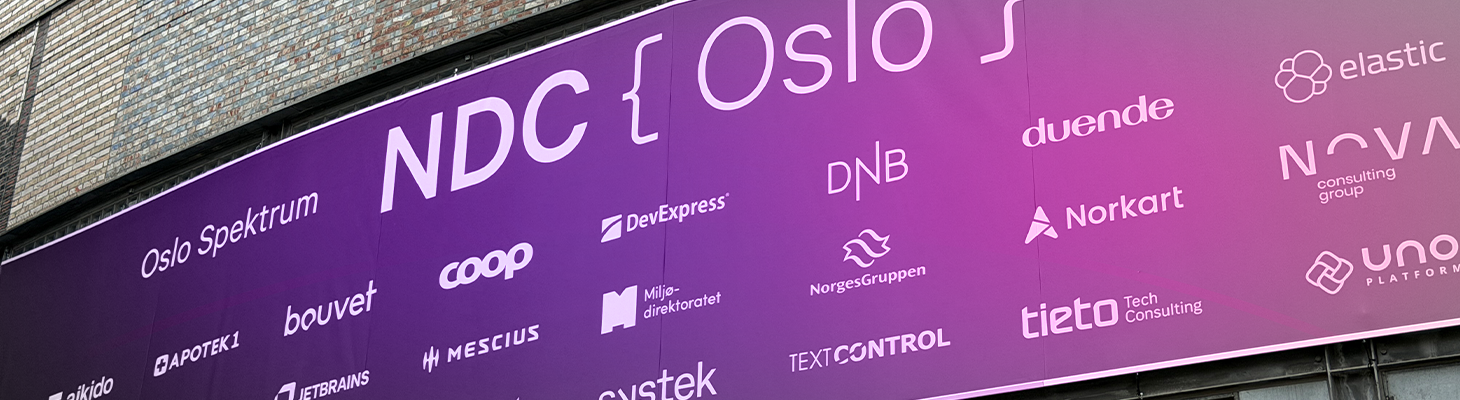
NDC Oslo 2026 has wrapped up, and after several busy days at the conference, we're returning with positive feedback, interesting technical discussions, new ideas, and conversations with developers building sophisticated document workflows in modern applications.
We talked to hundreds of developers, architects, and technology leaders about document generation, PDF processing, browser-based editing, electronic signatures, reporting, and a topic that dominated many discussions this year: how AI can meaningfully integrate into real-world document workflows.
Bringing AI Into Real Document Workflows
The NDC Oslo conference was the perfect opportunity to demonstrate our vision of AI's role in professional document processing. Rather than treating AI as a separate chat interface, we believe it becomes much more useful when directly connected to existing business applications' documents, templates, data, and workflows.
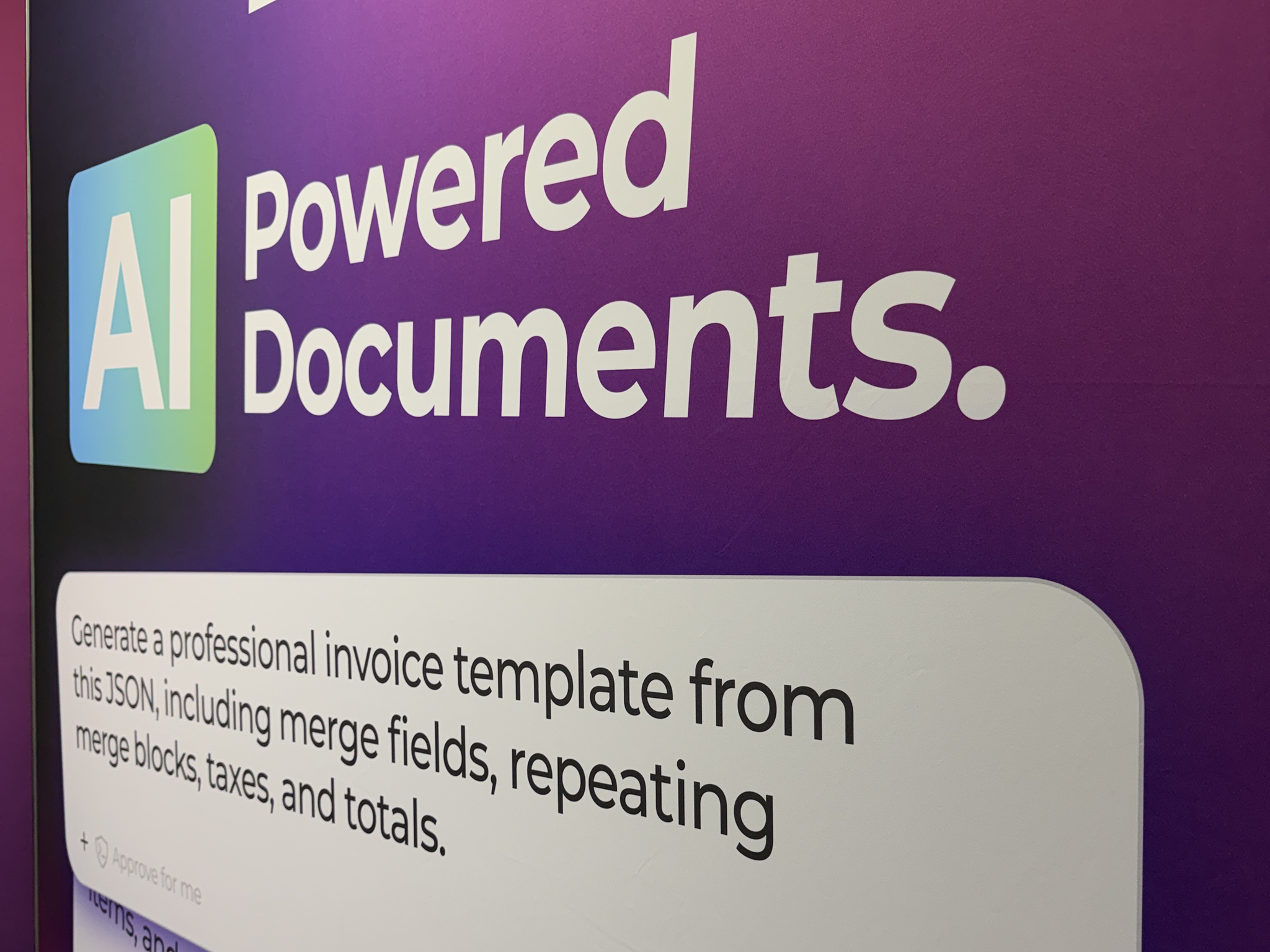
With TX Text Control AI, developers can integrate our document processing technology with local or cloud-based large language models to leverage AI directly within applications that create, edit, process, analyze, and transform business documents.
Privacy was one of the most important topics in these conversations, particularly because organizations increasingly want to use AI with contracts, invoices, medical documents, internal reports, and other sensitive information. At the same time, many of these organizations cannot or do not want to send these documents to external AI services.
We demonstrated how local LLMs can be combined with TX Text Control to build private AI workflows. In these workflows, documents and sensitive data can remain inside an organization's infrastructure while developers use modern AI capabilities for tasks such as document analysis, summarization, validation, extraction, and other intelligent processing.
Your documents. Your AI. Your control.
Many of the discussions we had at the booth made the possibilities clear. Documents can be summarized, analyzed, classified, compared, validated, or used as context for RAG and AI-assisted workflows. Meanwhile, the actual document processing remains integrated into the application and under the developer's control.
AI Was Only Part of the Conversation
Although AI attracted a lot of attention, many discussions began with traditional document processing requirements that developers face daily. These requirements include generating DOCX and PDF documents, building reporting systems based on templates and structured data, editing documents in a browser, processing PDFs on a server, creating and filling out PDF forms, adding electronic signatures, converting documents, and extracting content for other systems.
Deployment was another recurring topic because modern applications increasingly require reliable document processing across Windows, Linux, Docker containers, and cloud environments while providing consistent rendering and processing capabilities.
The current development is particularly interesting because AI does not replace these established document workflows. Instead, it adds another intelligent layer on top of them. A reliable document engine continues to handle structure, layout, generation, conversion, PDF processing, and editing, while AI understands and works with the actual content.
This combination sparked some of the most interesting technical discussions during the conference, particularly among developers who are experimenting with LLMs and seeking ways to integrate these models into structured, production-ready document workflows.
Developers Are Looking for Alternatives
Another notable topic at NDC Oslo was the number of developers who approached us because they currently use other document processing libraries, such as Aspose and IronPDF, and are evaluating alternatives for new projects or existing applications.
The conversations made one thing clear: Developers still want high-quality software components, but the type of components they value is changing. Simple UI controls and generic component suites have become much less important since AI can now generate standard interfaces, forms, layouts, and application scaffolding much faster than a few years ago.
However, the situation is very different when it comes to deeply specialized functionality. Technologies such as TX Text Control represent years of domain knowledge around document rendering, editing, PDF processing, conversion, reporting, electronic signatures, document formats, and platform integration. It's not as simple as generating a few classes with AI to recreate this level of functionality because the real investment lies in edge cases, compatibility, standards, rendering fidelity, performance, maintenance, testing, and the continuous evolution of an entire document processing ecosystem.
In fact, AI makes these highly specialized component ecosystems even more valuable because developers can use AI to orchestrate and automate existing complex functionality. Rather than asking an AI model to reproduce an entire document engine, developers can connect it to a mature API and use the model to perform tasks such as generating templates, processing PDFs, analyzing contracts, creating reports, and automating document workflows with reliable building blocks.
The Economics of Software Development
This also changes the economics of software development. Purchasing a mature component with a perpetual license is often more cost-effective than developing and maintaining the same functionality internally. Initial development costs are only one part of the equation, while ongoing maintenance, support for new document formats and standards, operating system changes, security requirements, browser updates, framework versions, and countless compatibility issues persist throughout the application's lifetime.
Therefore, pricing and licensing were frequently part of our conversations, but technical architecture was just as important because developers look for solutions that cover more of the document lifecycle without requiring separate libraries for generation, conversion, editing, PDF processing, and electronic signatures.
Using one integrated document technology for these different workflows can significantly simplify application architecture, deployment, licensing, and long-term maintenance while providing AI agents and intelligent applications with a powerful and predictable set of capabilities.
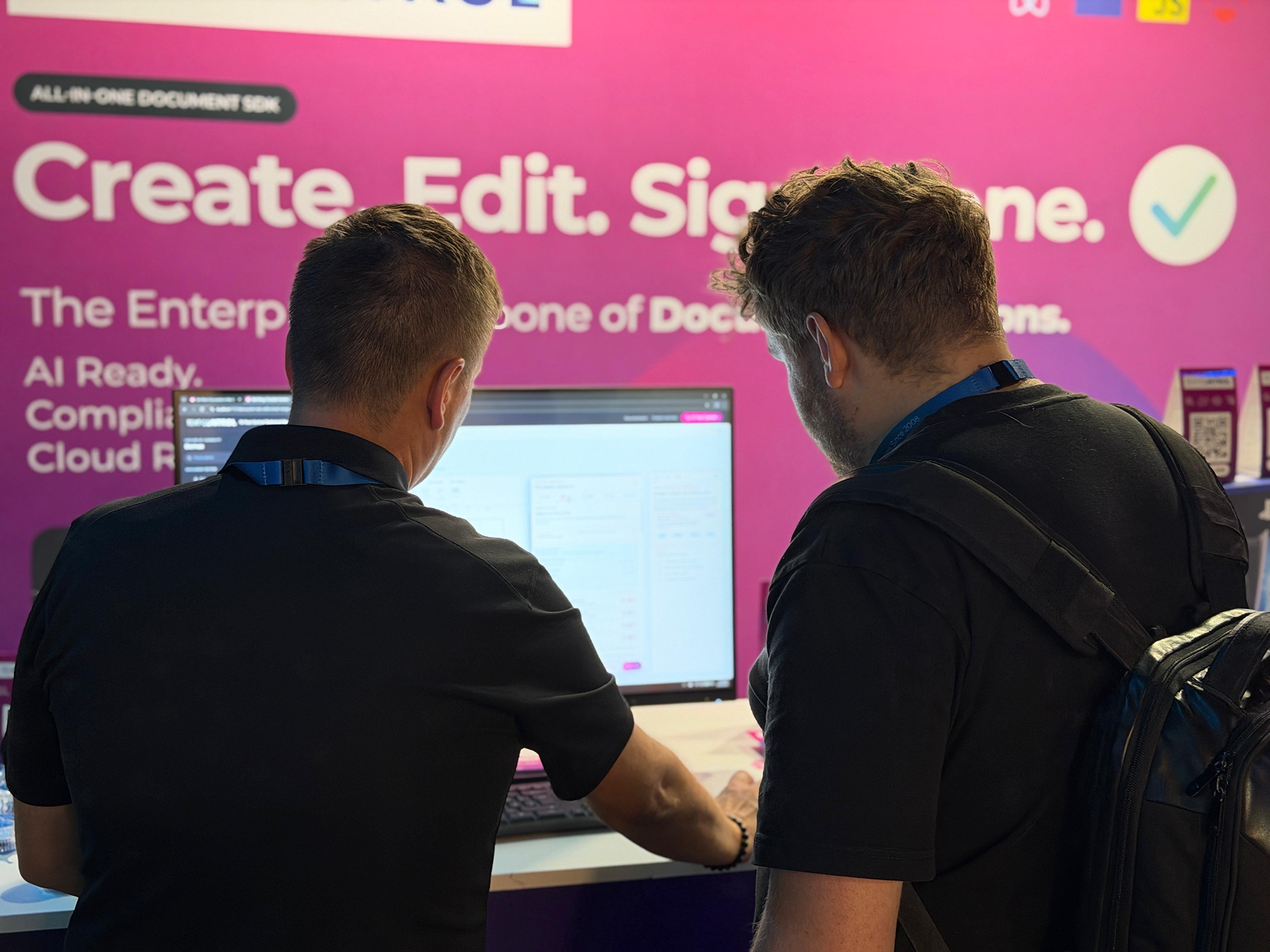
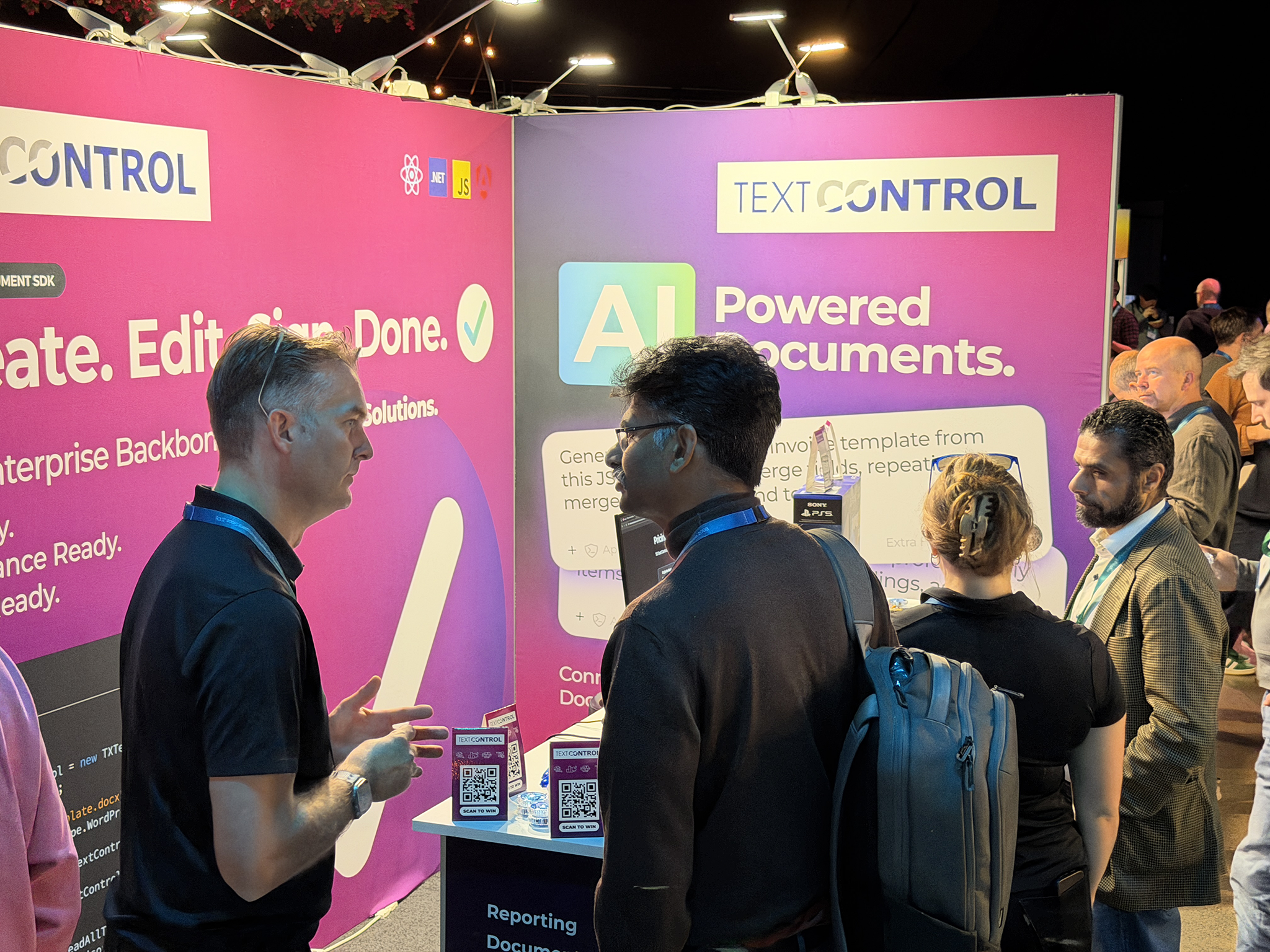
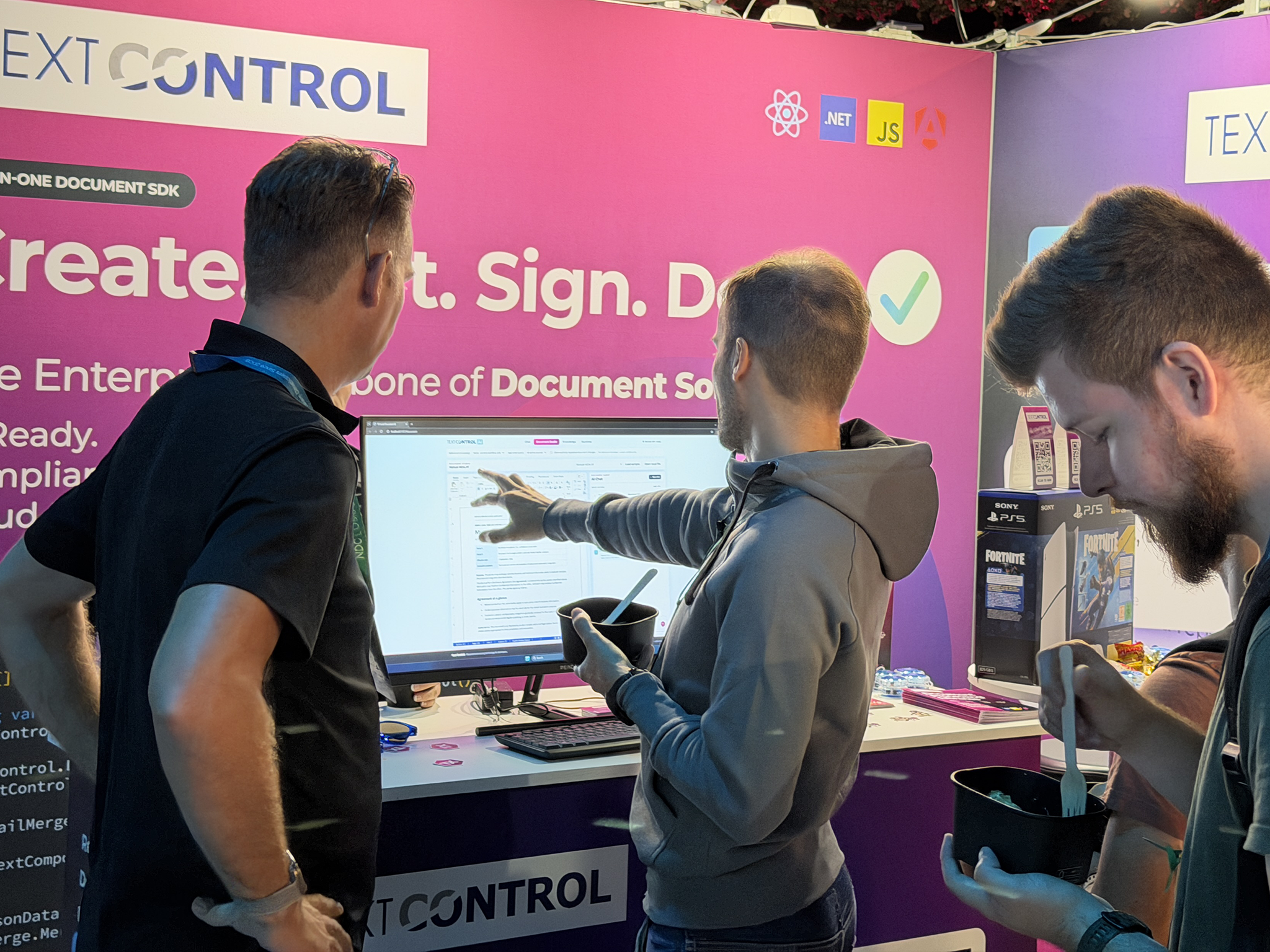
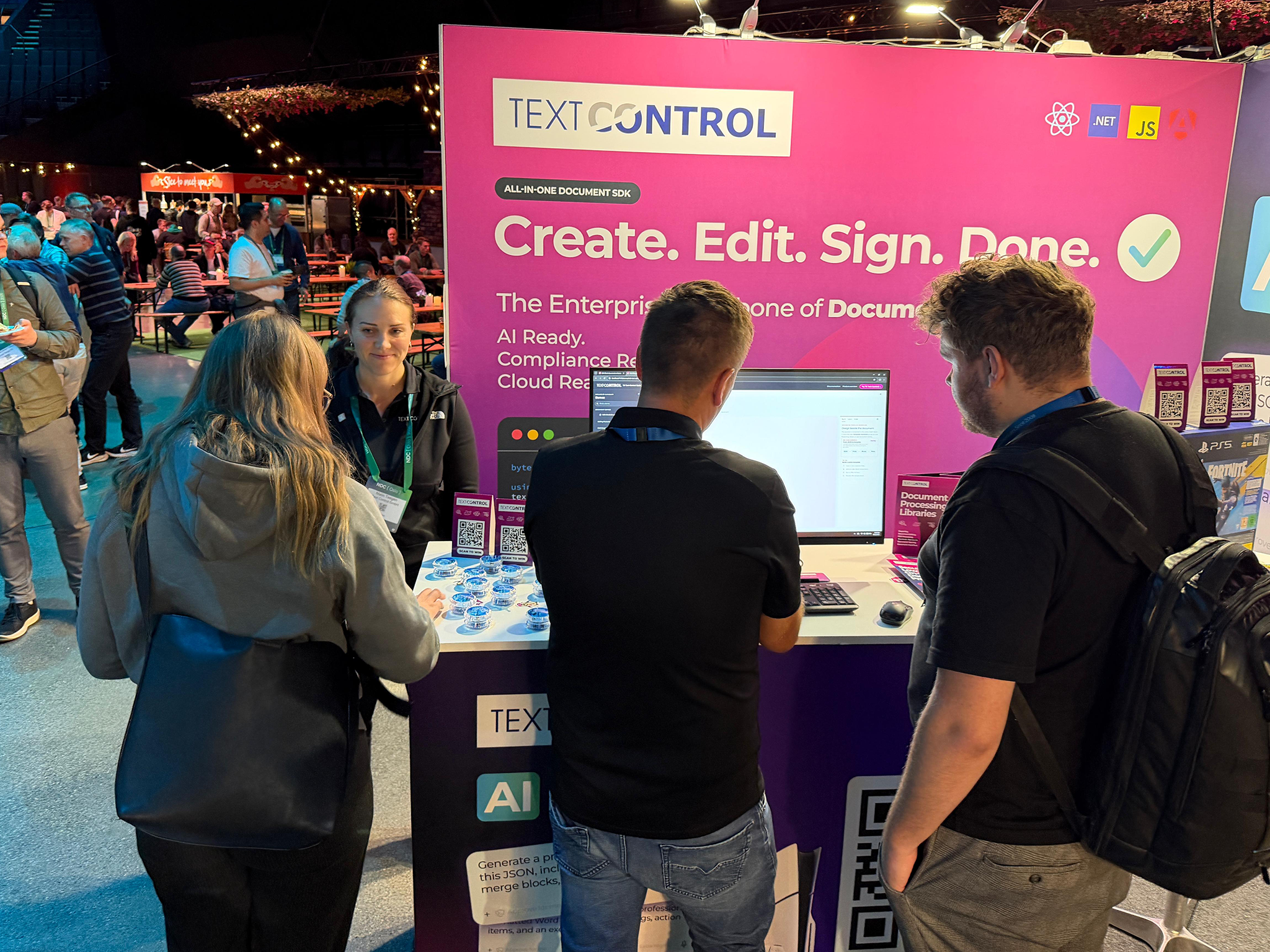
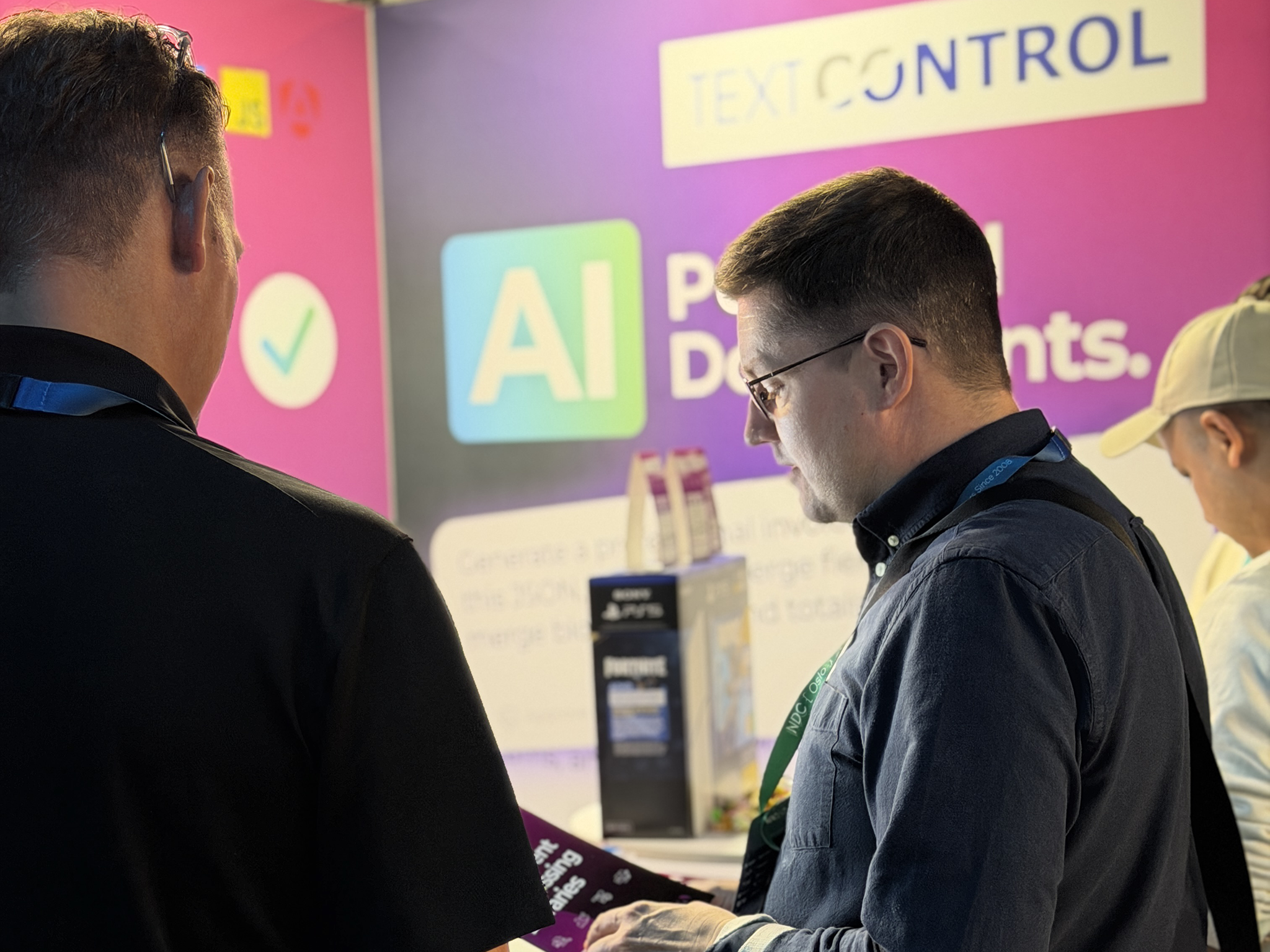
We value conferences such as NDC because these discussions happen directly with developers building applications. It's not unusual for someone to open a laptop at our booth, show us an existing implementation, and ask if TX Text Control can handle a specific workflow or replace the technology they're currently using.
These direct conversations are valuable because they provide insight into what developers are building today, where existing tools are limiting, and which capabilities will be important in future product versions.
More Than 400 Developers Joined Our Raffle
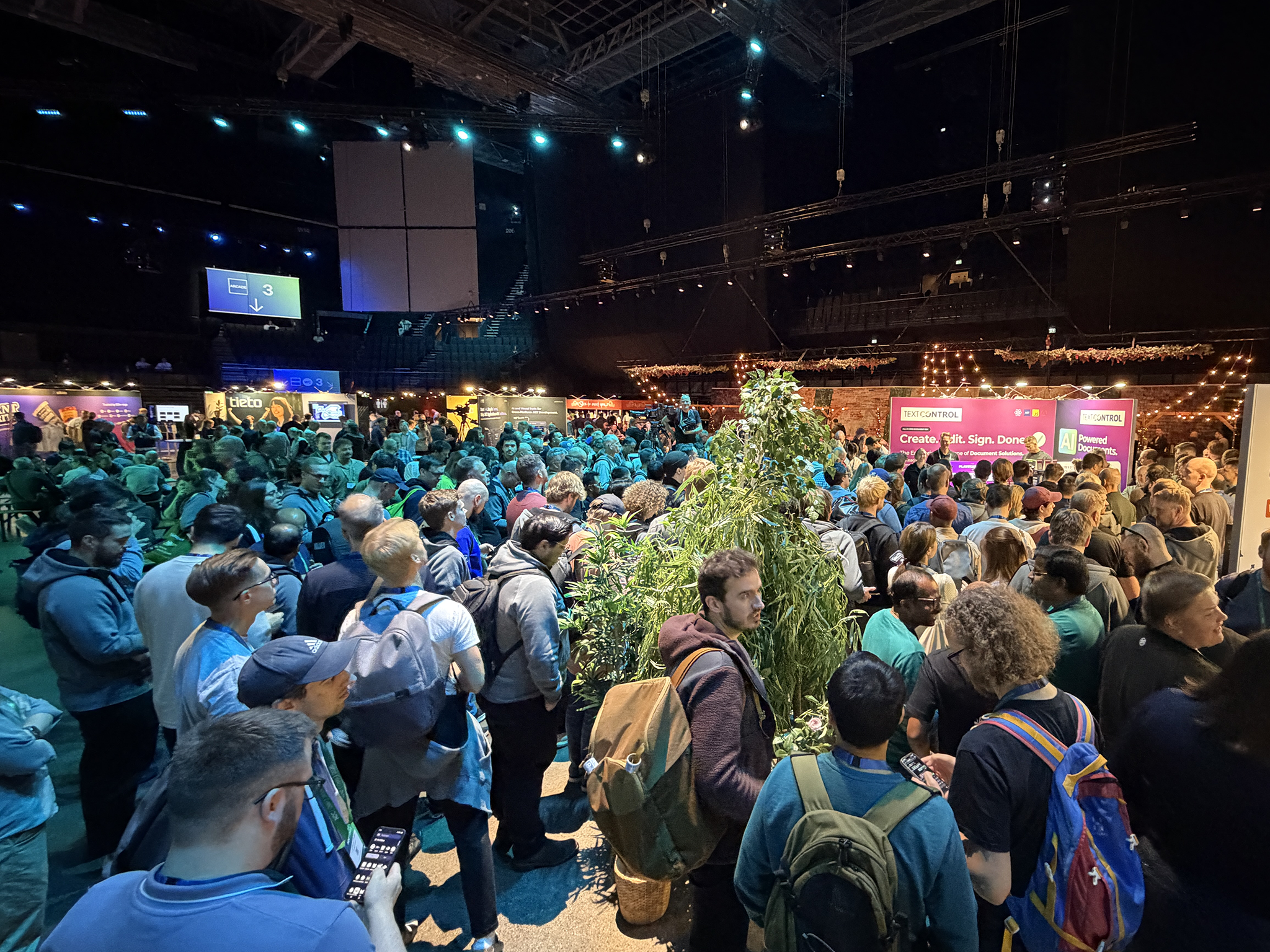
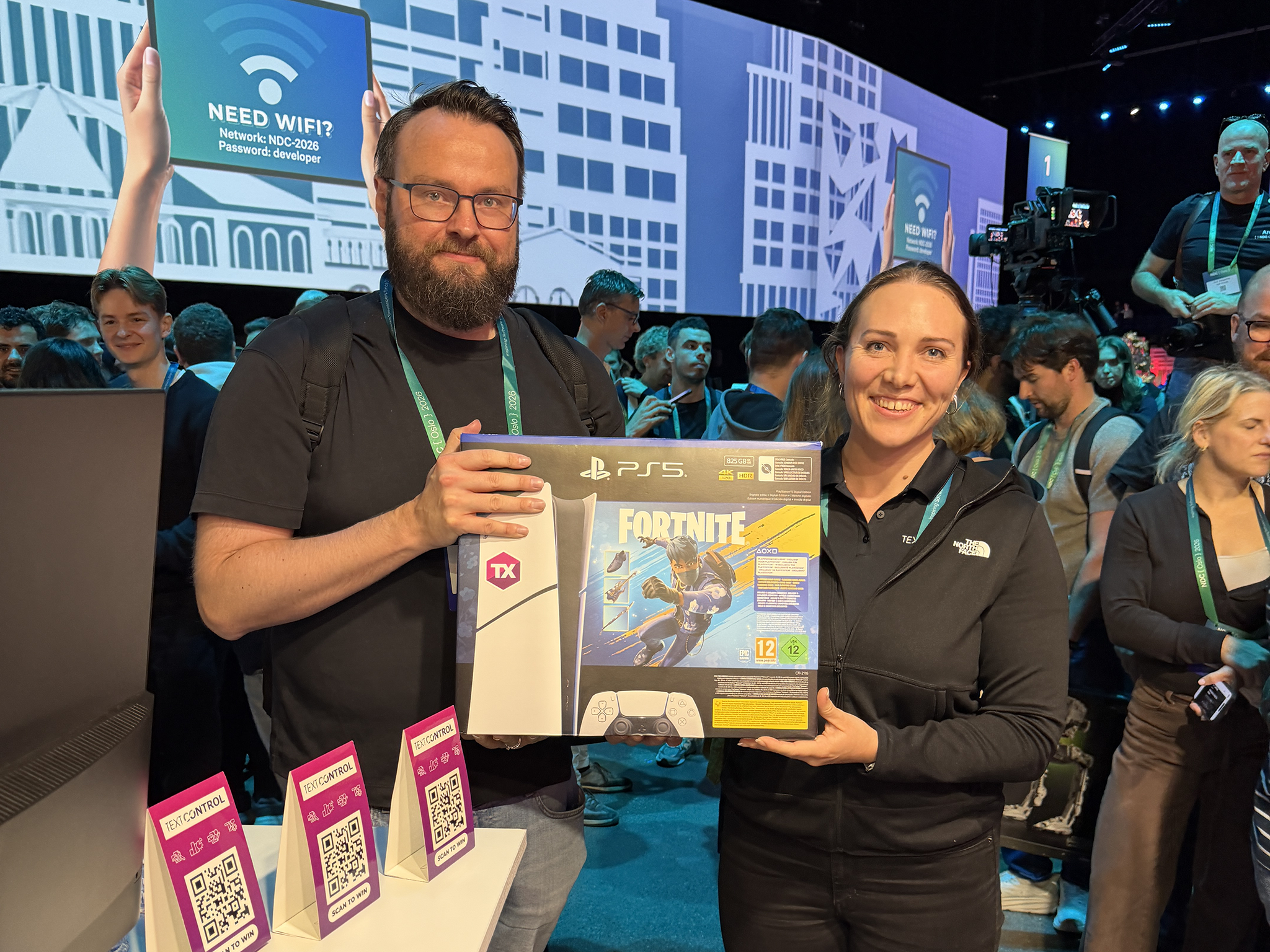
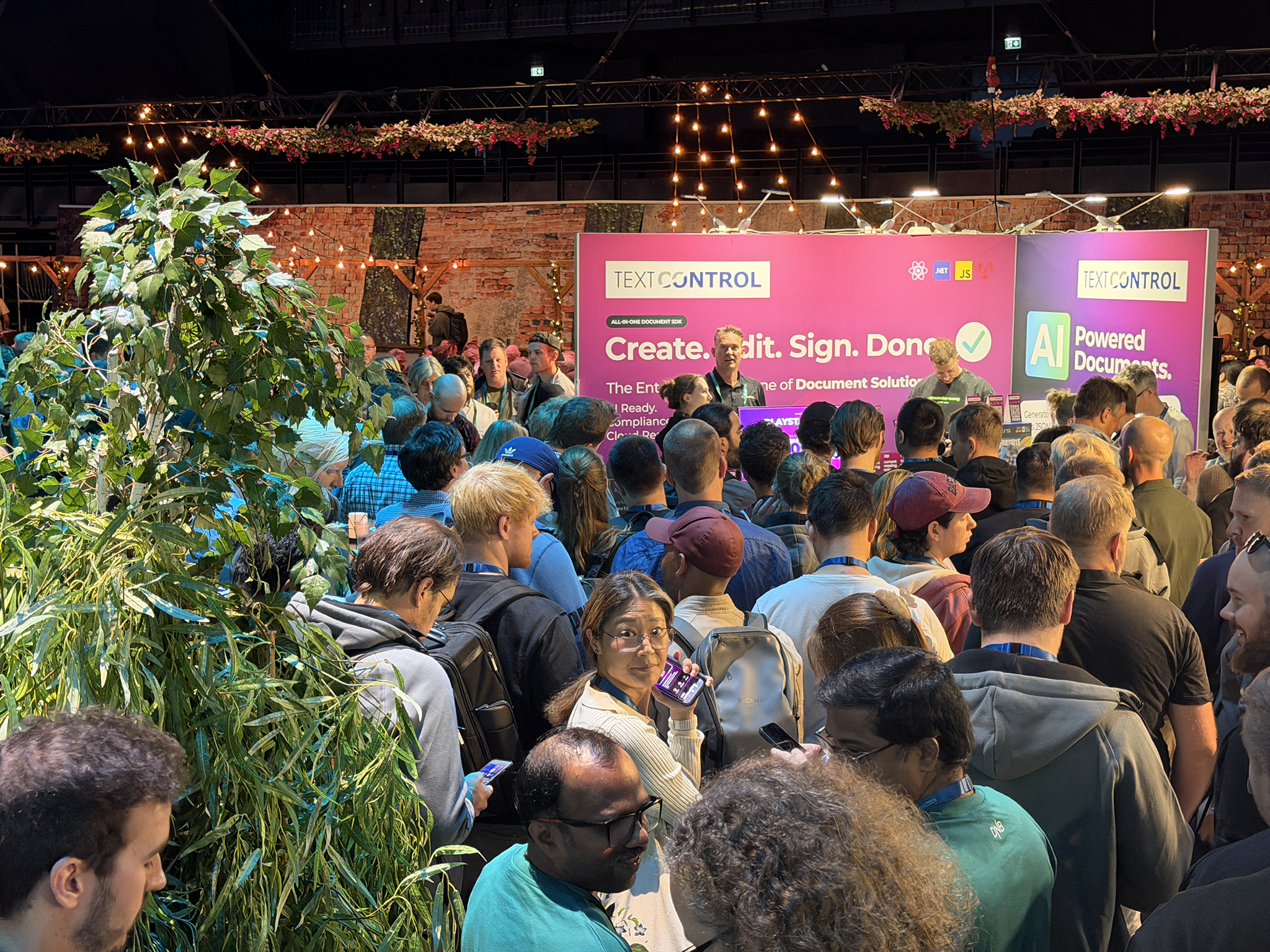
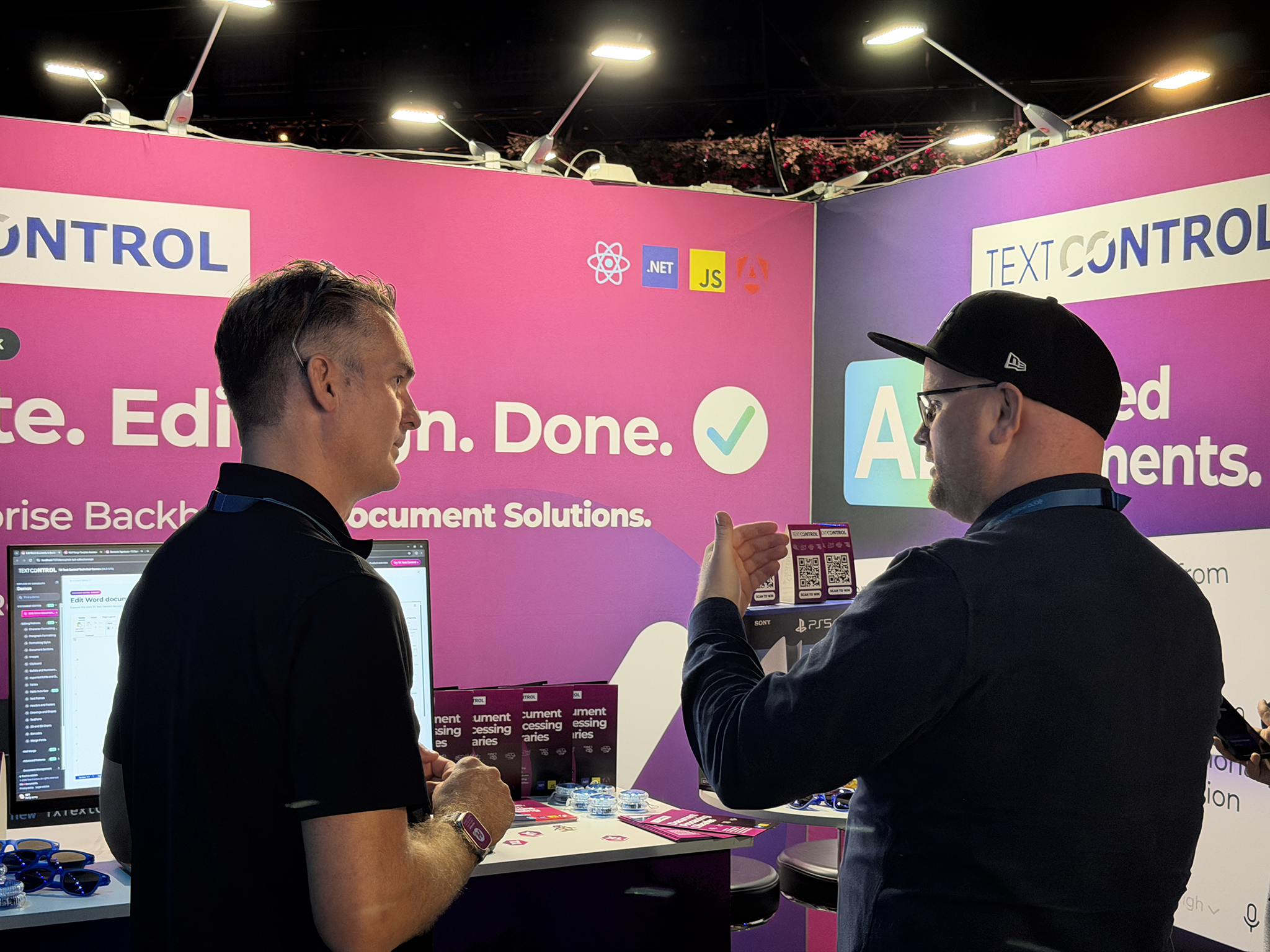
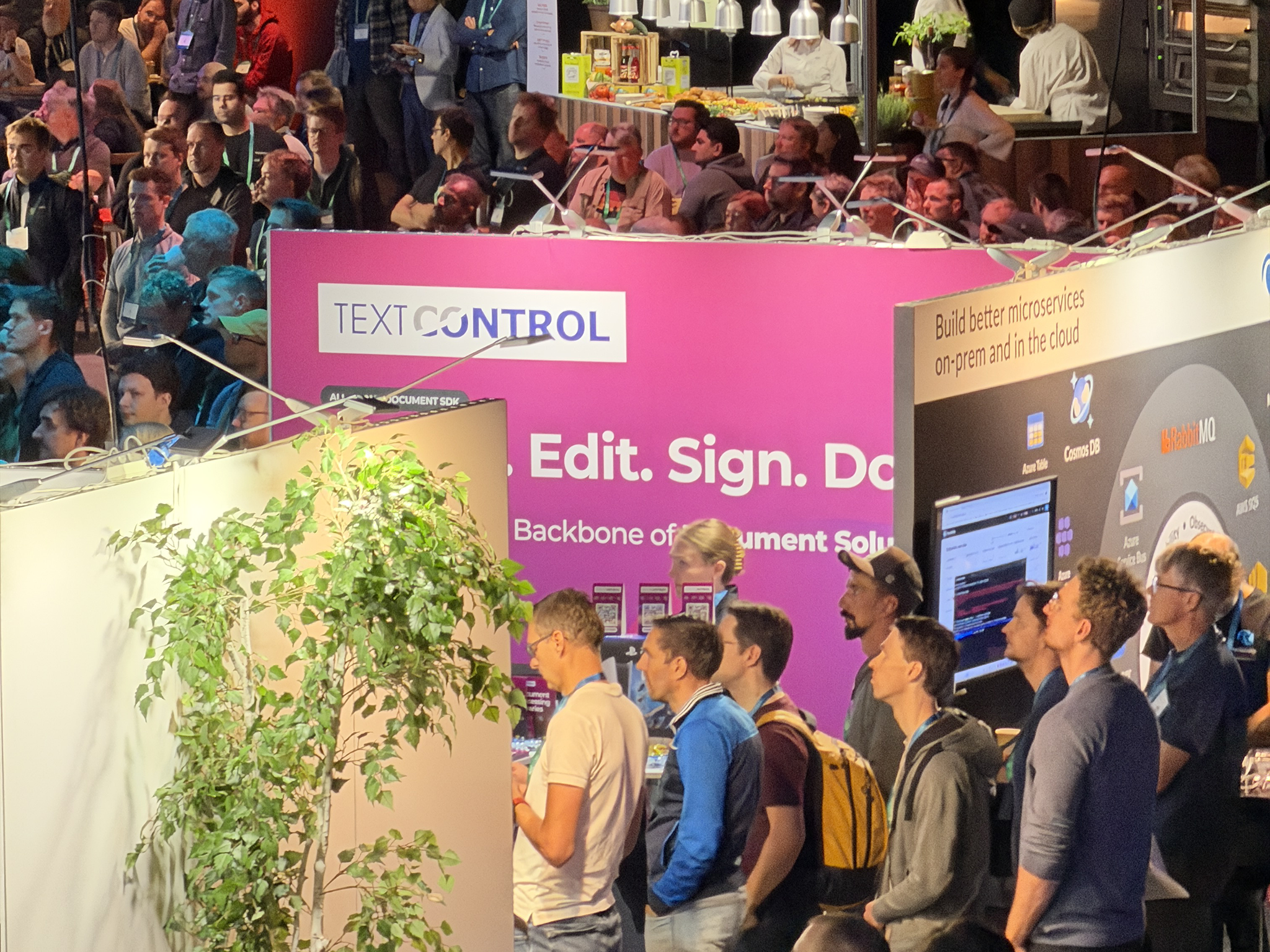
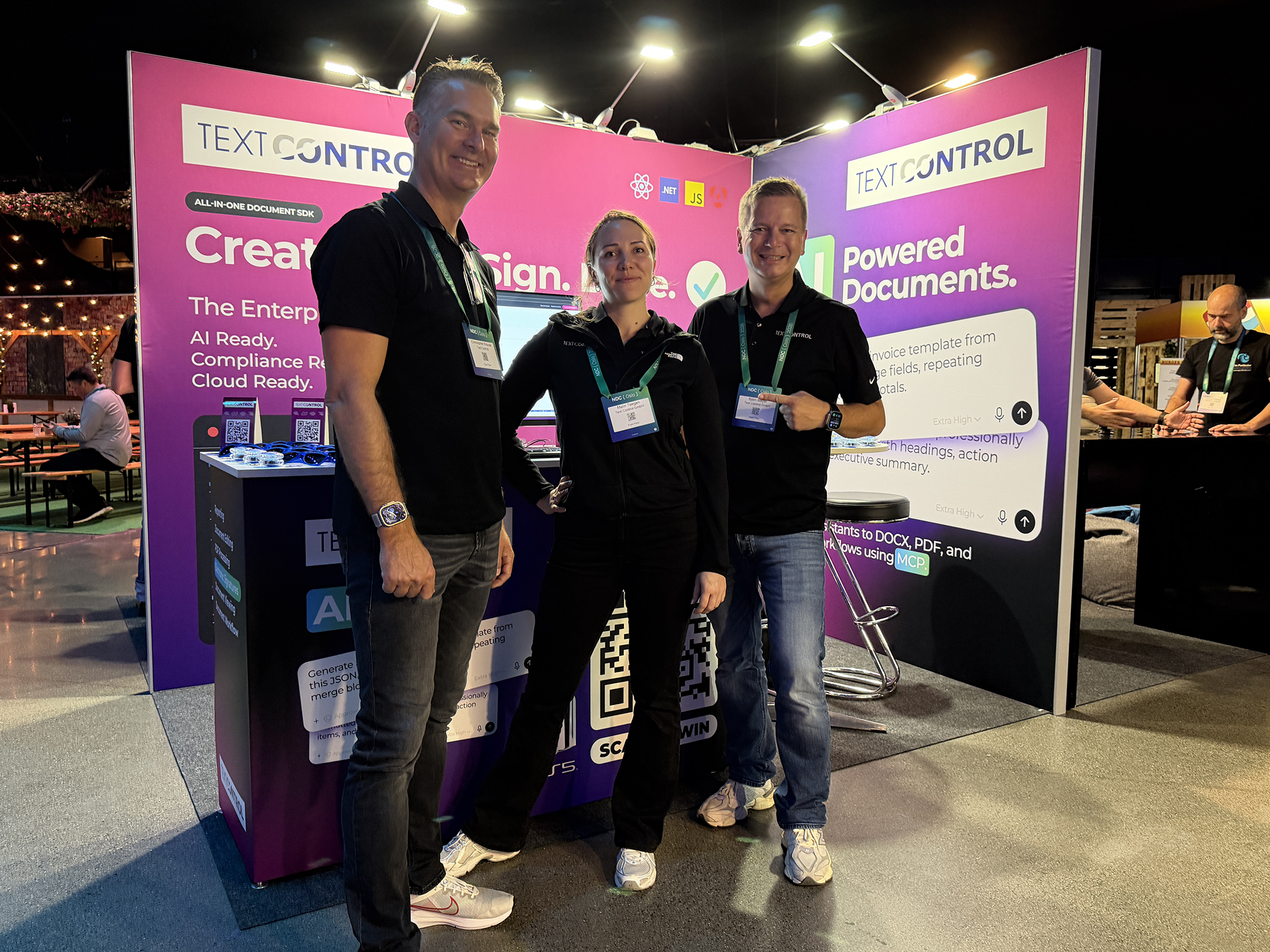
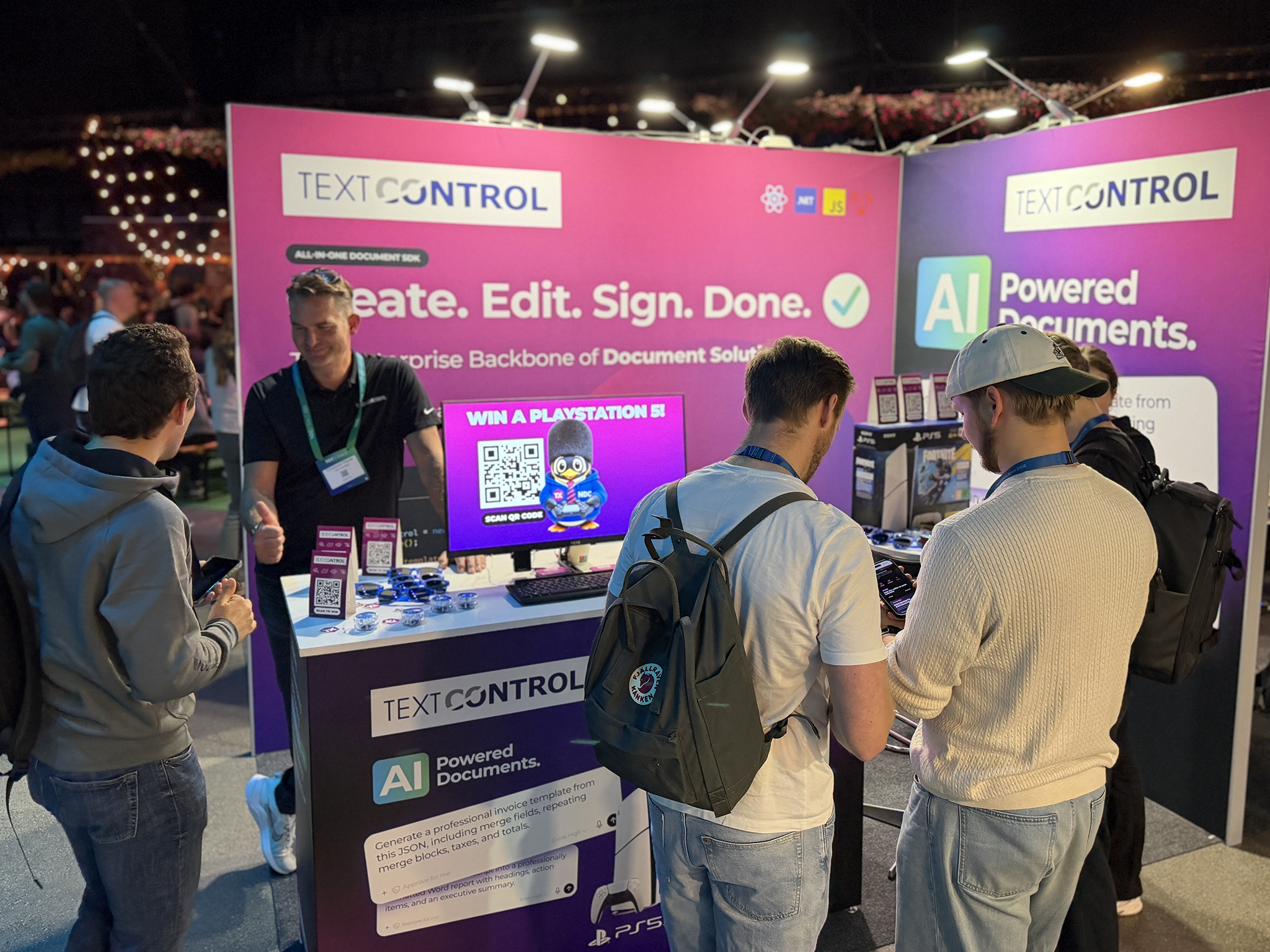
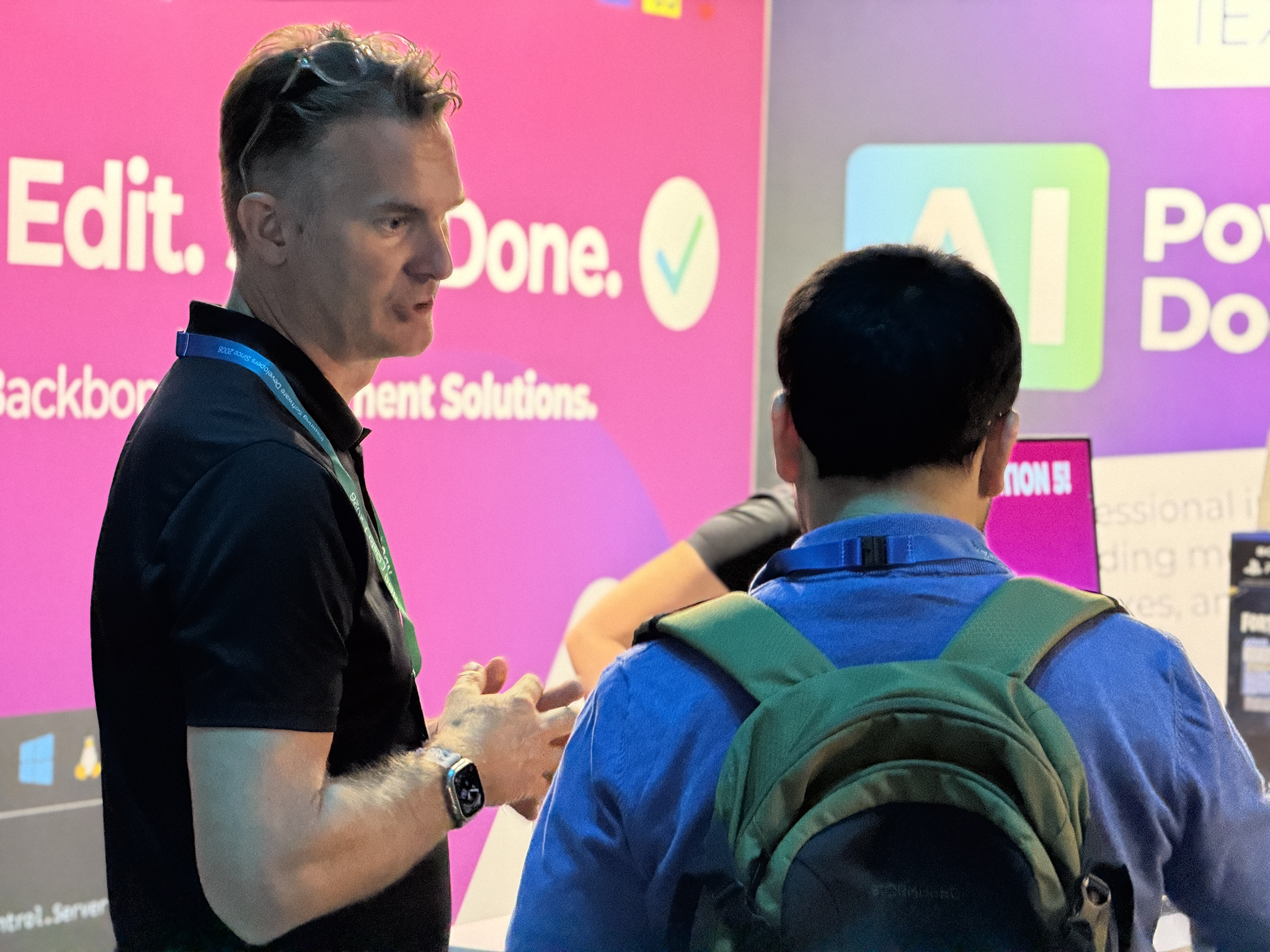
Of course, a developer conference should include fun activities. Our booth was busy throughout the event with live product demonstrations, technical discussions, giveaways, yo-yos, and sunglasses. Our raffle attracted more than 400 participants during the conference.
While the raffle generated a lot of activity around the booth, the more important result for us was the number of meaningful conversations that took place, as many attendees stayed for demonstrations, discussed their projects with our team, or returned later with additional technical questions.
We left Oslo with a long list of feedback, feature requests, integration ideas, and interesting use cases, especially regarding private AI, document automation, PDF workflows, browser-based document processing, and the growing demand for technology that developers can integrate directly into their own applications.
Thank You, Oslo
We would like to thank everyone who stopped by our booth, watched a demonstration, asked a technical question, shared information about an application they are working on, or came to chat about document processing, .NET, AI, and software development.
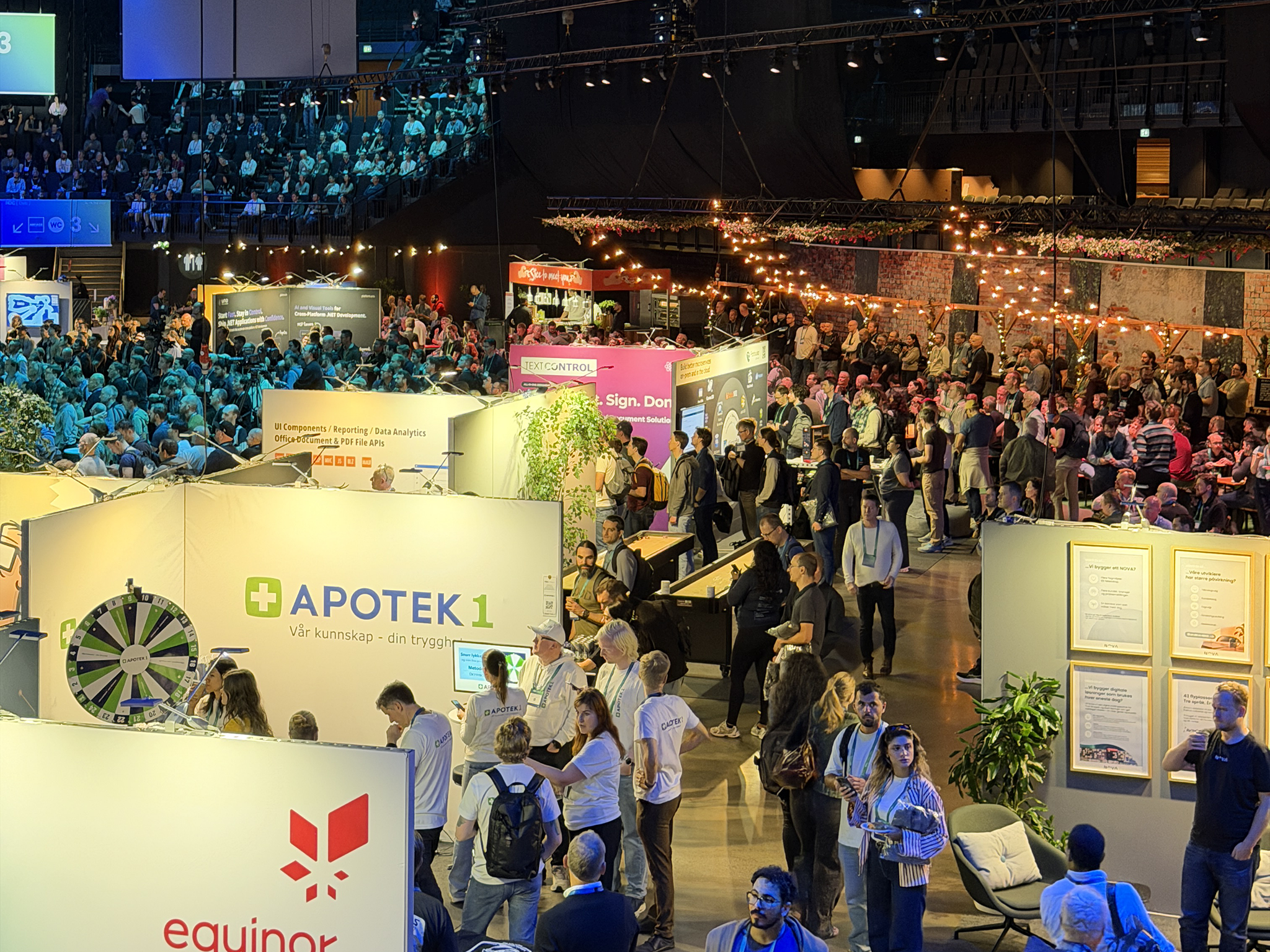
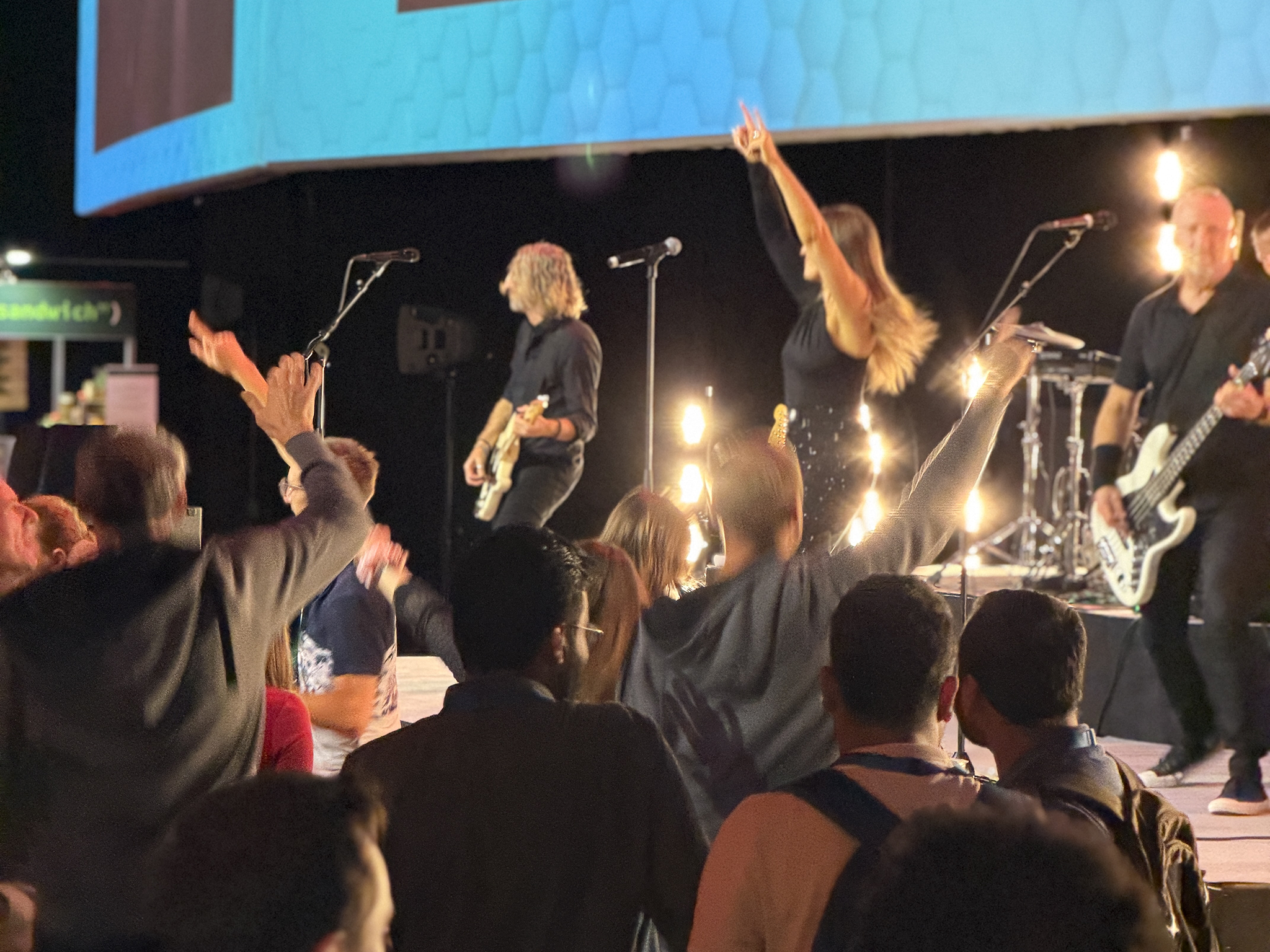
We would also like to thank the NDC team for organizing another excellent conference and creating an environment in which developers, software vendors, speakers, and technology teams could exchange ideas and discuss the technologies shaping the next generation of applications.
NDC Oslo once again confirmed why meeting developers in person is so important to us. While online documentation, demos, and technical articles explain what technology can do, direct conversations reveal how developers want to use it and what problems they need to solve.
We came to Oslo to demonstrate what we have been building, and we left with hundreds of conversations, new ideas, and even more motivation for our next project.
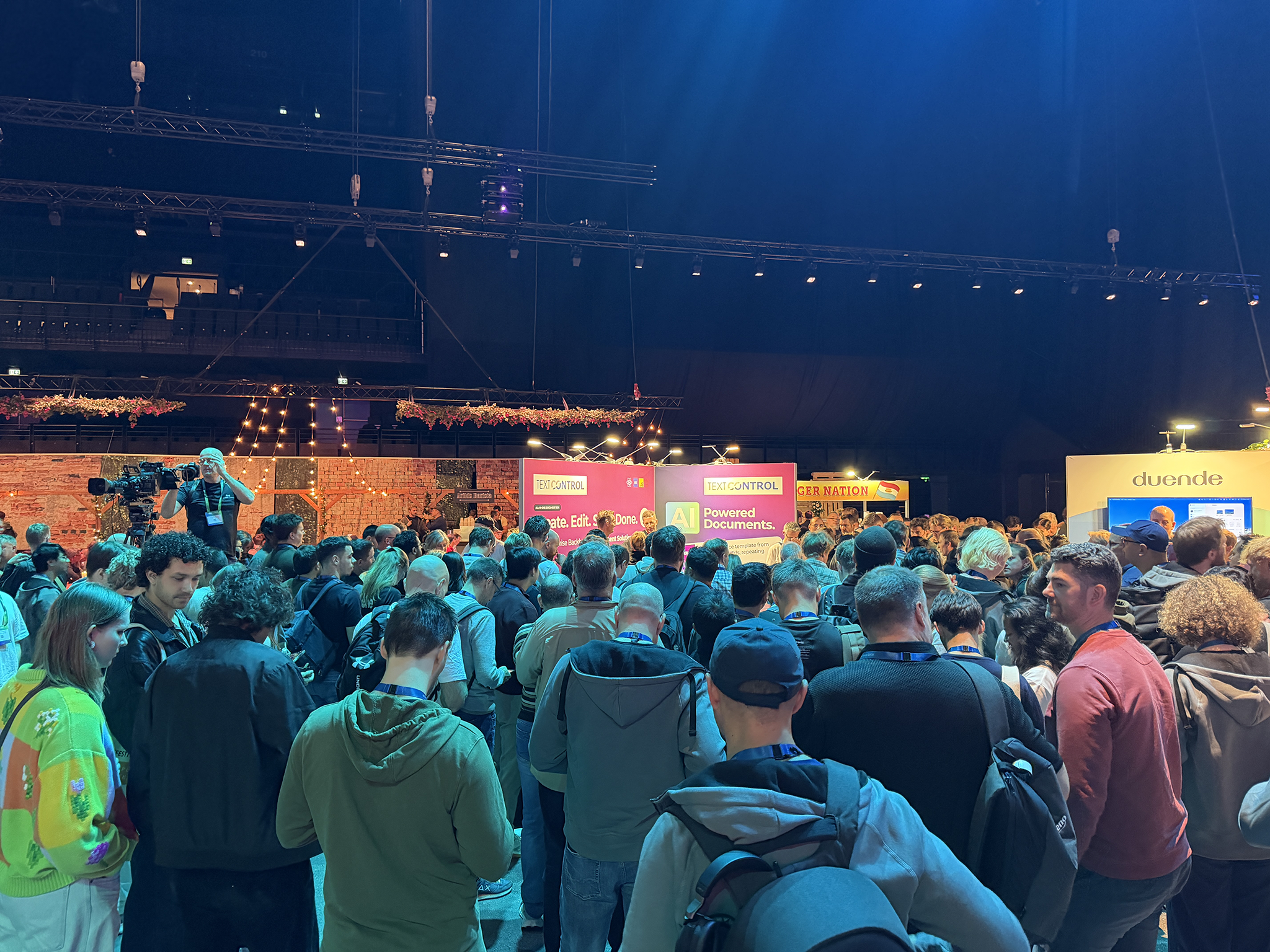
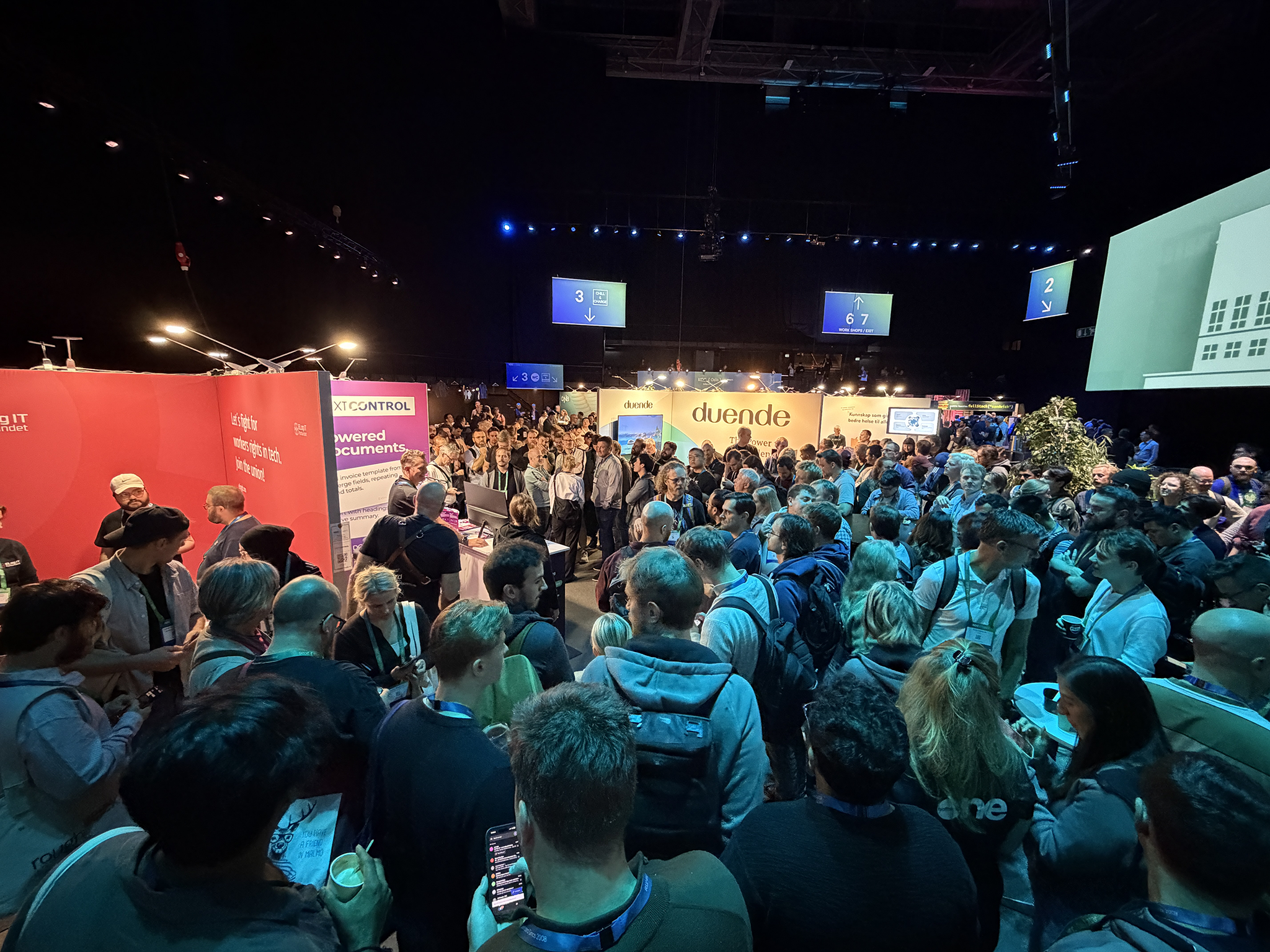
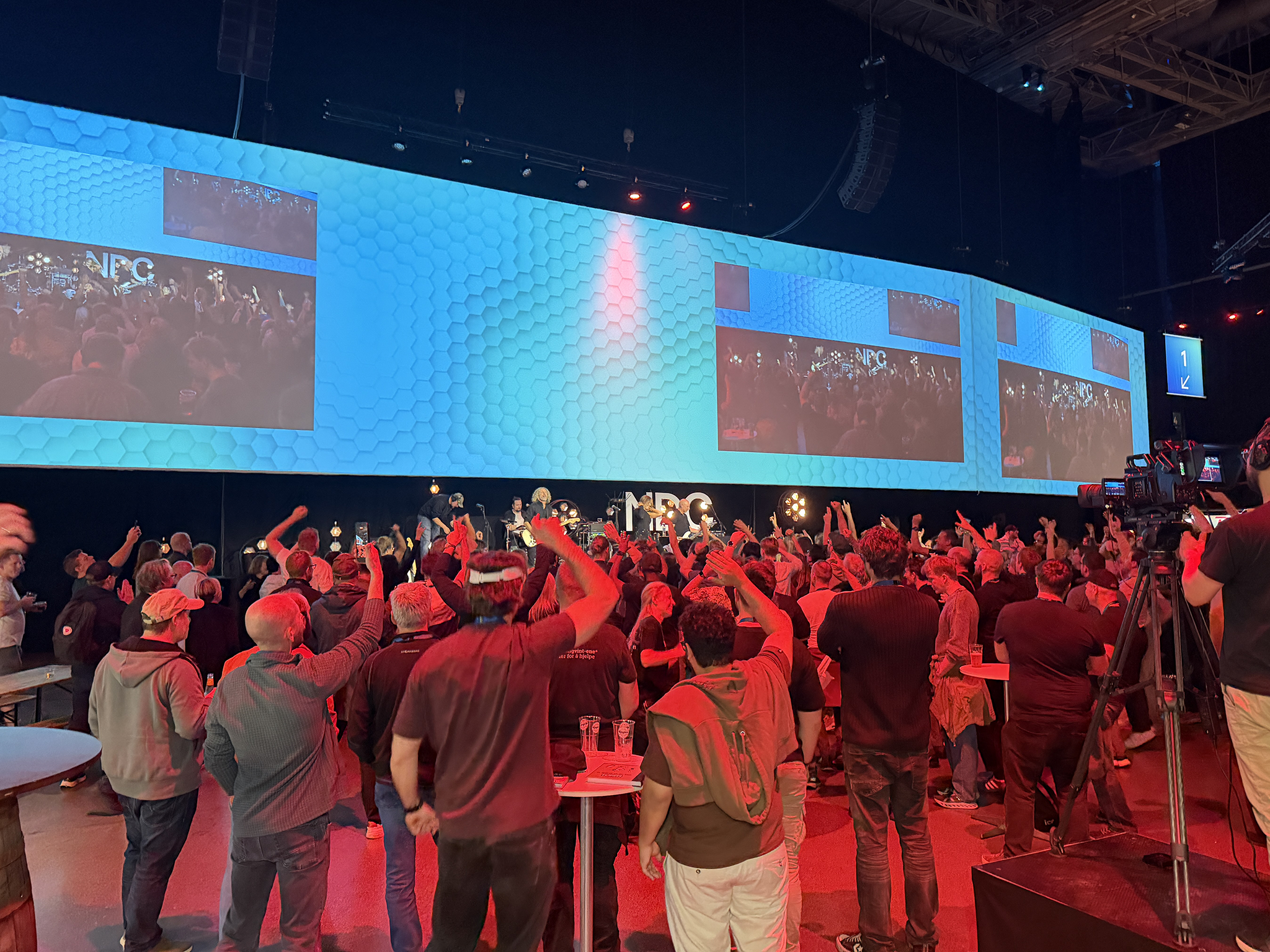
Here are some highlights from our time at NDC Oslo 2026:
See you next year at NDC Oslo!
ASP.NET
Integrate document processing into your applications to create documents such as PDFs and MS Word documents, including client-side document editing, viewing, and electronic signatures.




- Angular
- Blazor
- React
- JavaScript
- ASP.NET MVC, ASP.NET Core, and WebForms
Related Posts
Meet Us at BASTA! Mainz: Demos, Talks and More
Text Control is returning to BASTA! in Mainz as a sponsor and exhibitor. Visit our booth to meet the team, pick up some conference swag, and get an early look at the upcoming WebAssembly version…
Meet Text Control at NDC Oslo 2026
We are heading back to Norway. From September 14-18, 2026, Text Control will be a partner and exhibitor at NDC Oslo once again. It is one of the largest and most impressive software development…
Silicon Valley, Here We Come!
Preparations are in full swing for the WeAreDevelopers World Congress North America, and we are really looking forward to returning to the Bay Area for what promises to be one of the most exciting…
WeAreDevelopers World Congress Europe 2026 Wrap Up: Record Breaking Days in…
WeAreDevelopers World Congress Europe 2026 was a record-breaking event in Berlin, bringing together over 15,000 developers and tech enthusiasts from around the world. The conference featured…
Text Control Expands North American Conference Presence with WeAreDevelopers…
Text Control, a leading provider of word processing components and reporting tools, is excited to announce its partnership with the WeAreDevelopers World Congress North America. Scheduled for…